
By Shilo Hurst (29’)
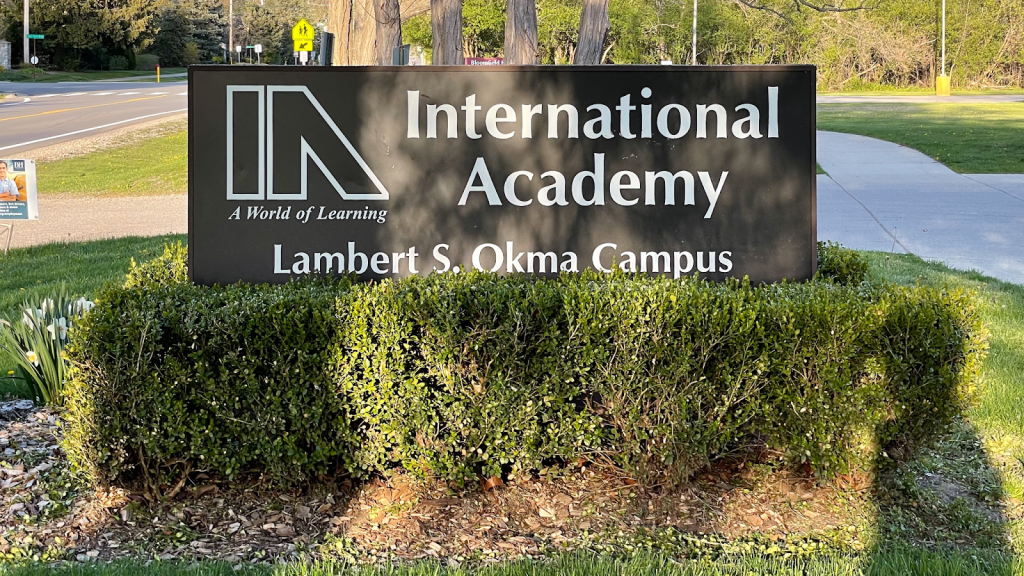
Image courtesy of Wikimedia Commons.
Here at the IA, the IB diploma is what we all work towards. It is what drives us, and what we hope to reach. The International Baccalaureate programme centers around the IB learner profile, teaching students to become well rounded, cultured, and obtain necessary qualities to be successful. It promotes intercultural understanding, communication, compassion, and the ability to respect differences. Over 4,000 schools worldwide follow the IB curriculum today. The IB has many achievements, but how did it originate?
Schooling in the 1900s was handled very differently from today. Children were expected to listen, not ask questions, and simply absorb information through long and boring lectures. It became clear to some teachers that this method was not working well for some students, and so the International Schools Association met in 1962 to discuss a better approach. This conference first coined the term “International Baccalaureate,” or IB, originally proposed by Bob Leach, the organiser of the meeting and original promoter of the IB. The framework for the curriculum was then created, and the IB was officially considered an organization in 1968. The Diploma Programme was developed mainly by Alec Peterson, a primary driver of the IB curriculum. For the next 6 years, the IB underwent a pilot program that took place across 12 schools in 12 countries. This pilot program followed the DP curriculum and also integrated the principles of CAS; Creativity, Action, and Service. CAS encourages students to do good in their community by developing a sense of compassion through service, exploring their own personal creativity, and staying healthy through activity. CAS was largely based on Kurt Hahn, a founder of Atlantic College in Wales, whose theory of “Outward Bound” Four Pillars inspired CAS’s foundation. The Pilot Program also introduced TOK, or Theory of Knowledge, a philosophy class that was intended to teach how different areas of knowledge connected. The first IB exams were taken in 1970, and in 1975, the first IB diploma was developed after the success of the pilot program. By 1983, Spanish was recognized as an official language of the IB, along with English and French. The IB developed the Middle Years programme in 1994 to try to introduce an intercultural education to kids before high school, and the Primary Years Programme quickly followed in 1997. The IB Learner profile was created in 1997 as well, to help students in an IB school become reliable, active members of communities around them. It follows 10 traits which IB learners strive to be: inquirers, knowledgeable, thinkers, communicators, principled, open-minded, caring, risk-takers, balanced, and reflective. The IB learner profile was highly successful, and led to it being taken program wide in 2006.From the 1970s to 2016, the IB had gone from having only 7 schools worldwide to having around 4,538 schools around the globe. It now teaches around 1.25 million students, and has 161,104 DP exam candidates. The International Baccalaureate was a huge step forward in the education system, and continues to make the world better through inspiring the next generation to be global citizens, and to be open to differences that help them learn and grow. While the IB has an interesting history already, it is still in the making, and every student who enters the program has the potential to make that history even richer.
 The Overachiever