
by Lilly Barnhart (‘27)
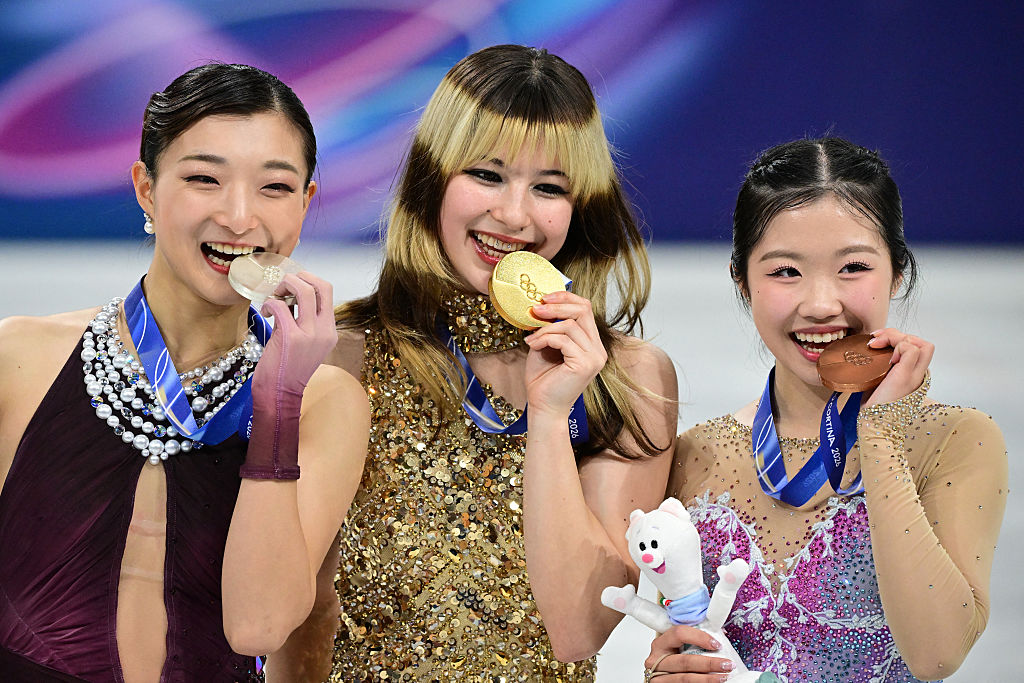
Image courtesy of Getty Images ISU Skating
Now that the 2026 Winter Olympics have come to an end, there is a sport still lingering on my mind — Figure Skating. This year, more than ever, the skaters were artistically moving and talented. And every time I heard a famous film score used as the accompanying music, the program held an entirely different meaning. The familiarity and depth that movie scores offer clearly benefited the figure skating routines and their emotional value, as many of us cannot stop thinking about these performances.
Ilia Malinin from the US team, known as the Quad God for being the first figure skater to land all six types of quadruple jumps in competition, said in an interview that he wanted “to bring back the glory days of figure skating”. I believe that as the tricks become more impressive, the sportsmanship more wholesome, and the music more dramatic and versatile, his goal is being achieved. He himself leans away from the standard classical music and instead uses pieces he feels connected to. Alysa Liu, our Gold Medalist, also said what made figure skating different for her after coming out of retirement was getting to have more creative freedom, picking her music, and costumes being a part of that. During the 2026 Winter Olympics, more and more skaters used well-known and iconic film scores to create their personal piece of music. Many of the skaters emphasized how important a good piece of music is, explaining how it is very common to combine pieces and remix them to convey the message that they want to present in their program. The relatively frequent inclusion of film scores in these specialized pieces shows their impact on storytelling in an artistic, technique, and emotion-driven sport. So, here are some of the most memorable uses of film scores in the 2026 Olympic figure skating programs.
Ilia Malinin, arguably one of the most intriguing skaters this year at the Olympics, performed a program for the team event free skate to an “A Voice” medley that consisted of a combination of three pieces and his own voice. It was made of the pieces, “A Ball” by Asaf Avidan, which is part of the score for the movie “Le Bal Des Folles”, “Code Duello” by Power-Haus and Sergiu-Dan Muresan, a piece often used in film promotions, and lastly the piece “The Smell of the Sea” by Alan Mayer. All three pieces are truly beautiful on their own, but they were tastefully combined to create a dynamic and artistic program. His performance starts with “A Ball” and his own voice. The simple cello and piano notes are repeated as it grows into a louder more dramatic piece. As the deep, rich tones of the cello and piano remain, a higher melody is added, making the performance tender and emotional. This growth supported Ilia’s artistry as he progressed from slower and fluid movements to skillful jumps that the audience anticipated. After “The Ball” reaches its climax in melody and dynamics, the piece switches to “The Smell of the Sea,” creating an abrupt change in pace and feeling. Ilia Malinin beautifully executes this change with a smooth skate backward. He follows the ups and downs of the simple piano notes as his voice is added back in to tell his story. This piece is only played shortly, but creates a smooth and gliding tone. The last switch is even more dramatic than the first when “Code Duello” starts playing. The sweeping electronic orchestral sounds prompt Malinin to skate faster, taking longer strides, matching the crisp music. Soon, higher melodies that flutter above the core of the piece are added, along with booming percussion, creating tension. Here, Ilia executes his most extravagant and difficult skills, adding in a backflip that is perfectly matched by a powerful beat drop. His program ends with a crescendo of the high cinematic synth textures, developing a sense of urgency until they are cleanly cut off, and Ilia comes to his final pose.
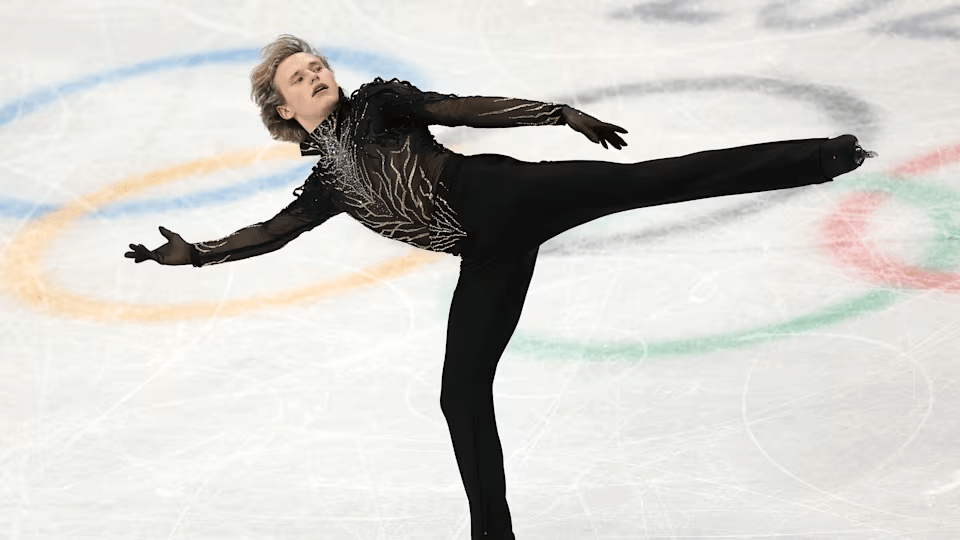
Image courtesy of 2026 Getty Images Olympics
Another interesting and entertaining use of film scores in figure skating was Lara Naki Gutmann’s freeskating program, where she skated to a combination of “Jaws” by John Williams and “Inception” by Hans Zimmer. Hearing the “Jaws” soundtrack was certainly surprising, as it was unexpected and a very unique choice. But it definitely made her story clearer and the switch to “Inception” even more surprising. Because she had performed the same program in the season before the Olympics, she was able to explain some of her artistic intentions regarding the music and her skating. She explains that in the first set of the program, “I’m the shark and I’m kind of chasing my prey”. As most know, the “Jaws” score is intense and conveys a sense of urgency, and Gutmann matched this energy with her movements. She skated quickly and precisely to give the effect of being a shark in water, using up much of the rink and performing many of her hardest skills. The change to “Inception” comes right after a big crescendo in “Jaws”. She described the music as “It’s going up slowly.” This growth is what makes the program so interesting, because one can now see long sweeping motions instead of shorter, precise ones as the music grows into faster and more intense electronic and orchestral sounds. Since the score was made for a movie that captures the complexity of dreams, the meaning and story behind her program also change. She said that she went from being the shark to being the ocean or the sea. This idea makes beautiful sense with the music because it follows the pattern of waves in both dynamics and choice of instruments, and pace. She ends the program with a strong orchestral piece that she said gave her the strength to end her performance on a good note.
Besides these two programs, there were plenty more performances to other scores, such as Conclave, Gladiator, Dune, and even pieces from “The Ballad of Songbirds and Snakes” that are all worth watching and admiring.
It is important to realize that film scores do not just support the movie they are made for, but also other art forms, because they tell a story. Figure skaters cleverly use them to aid in their storytelling and to allow the audience to understand the intentions behind their moves. With this particular use of movie scores, we get to realize how impactful they were in their original setting since the programs gain an entire plot line when they use these scores. Through movement and interpretation, these figure skaters turn the cinematic music into new and powerful performances, proving that film music extends far beyond the theaters.
 The Overachiever