
By Lilly Barnhart (‘27)
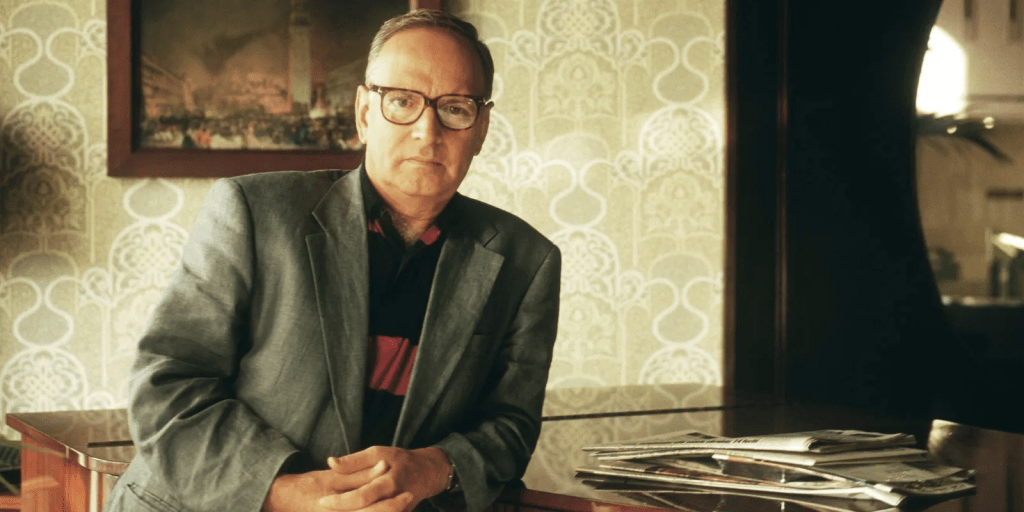
Image courtesy of Pitchfork
Ennio Morricone — one of the biggest names in film music. While many may not know his name, they certainly will know his legendary whistling theme from “The Good, The Bad And The Ugly”. Simply put, Ennio Morricone can be called a musical genius, and because his powerful compositions can be admired with or without an accompanying movie, it provokes the discussion about how much a score should contribute to a movie. Can a strong score still be overwhelming? Morricone’s compositions are proof that film scores can go beyond the depths of movies and surprise the audience with their intensity. At least, his work tends to do so.
Ennio Morricone worked on over 500 different films in his life, winning an Academy Award at 87 years old and performing at concerts up until a single year before his death at 91. Morricone was not simply talented; he was an inspiringly hard and humble worker. He accepted his first Oscar for Quentin Tarantino’s Western film The Hateful Eight and lovingly dedicated it to his wife. His entire life, he stayed in Rome and declined an offer to move into a mansion in Hollywood. His refusal to learn English may seem ignorant to some, but in reality, he simply did not deem it necessary. His life was dedicated to music and composing, not being a global figure. His loyalty to Italy reflected much of his identity as he often used music to embody his personality and values. He specifically once said, “Working for the cinema has been a precious experience because it gave me the chance to experiment with my ideas, to listen to them performed by an orchestra, and then use them for a precise aim.”Ennio Morricone was always very careful and intentional with his compositions. Composing with just a pen and paper, he brought a new kind of emotional value to film music. And while he may have gotten much recognition for his scores in Western movies, he once said, “I am disturbed when people think about me as a specialist for Westerns” because his compositions are so versatile. They range from orchestral melodies to electric guitar twangs to crescendoing vocals and simple strings. Morricone was never afraid of making strange and emotional music. He used unconventional sounds, such as whips, gunshots, voices, harps, animal sounds, and harmonicas. His compositions were simple, which made them easy to understand and feel. For most of Morricone’s scores, the audience is left in awe of his music. As an example, “His score for The Mission (1986) was described as so moving that rather than complementing the film, it overwhelmed it”. Also, his piece “The Ecstasy of Gold” for “The Good, The Bad and The Ugly” became almost emotionally unbearable, combined with the movie. It perfectly complemented the story of the movie. The heavenly vocals of Edda dell’Orso blend in and out of focus with the rest of the orchestra. The piece reaches highs and lows, including unique sounds, all while maintaining a steady and truly Western beat on percussion. At the time, people had never heard such a gripping film score before. Rather than using the movie to make the score, the score was used to make the movie, creating a new sense of understanding and appreciation for film.
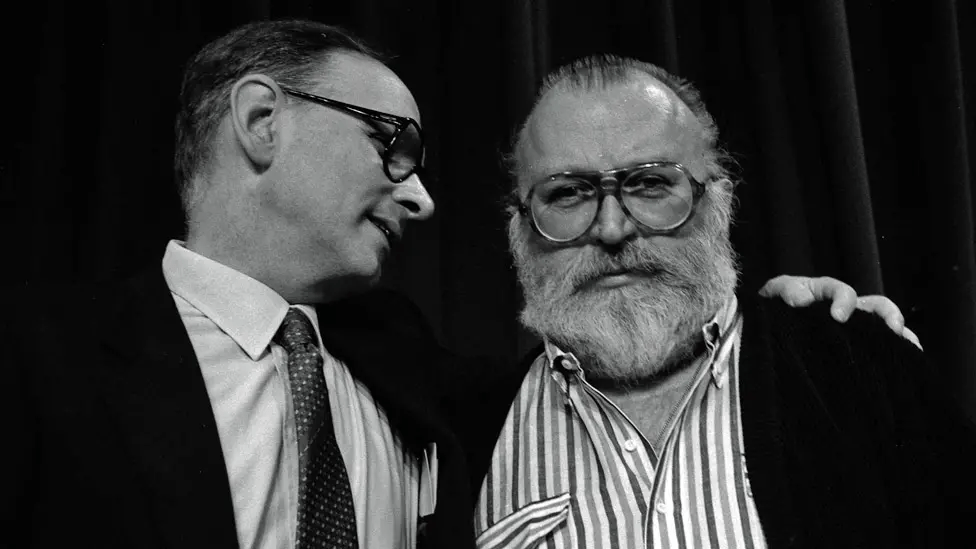
Image Courtesy of BBC News
This way of creating movies was strongly supported by Sergio Leone, an Italian Filmmaker. One cannot think of Sergio Leone’s Western films without thinking of Ennio Morricone’s music. The two became close companions in the Film industry, working on multiple films together after having been schoolmates decades before. Their films became culturally significant and unforgettable because “Leone wanted Morricone’s music to be the very heart”. Leone waited until the scores had been complete to play on-set and inspire the cast. He wanted the actors to act based on the music and move alongside it. This duo set the pathway for music to get more recognition and hold more cultural significance than ever before. Morricone’s music also became the inspiration for other filmmakers and composers such as Hans Zimmer. He became his primary source of inspiration and stated, “‘Once Upon a Time in the West’ as the score that inspired him to become a composer”. One can see some similarity between their styles as both worked and work frequently with electric guitars and prominent volume changes. It is easy to see that Hans Zimmer looked up to Ennio Morricone’s experimental style and openness to new ideas.
As someone who grew up listening to Ennio Morricone’s music, it is easy to say that he brings emotions to life. His compositions are effortlessly nostalgic and embody all kinds of emotions. Relief, urgency, desperation, wonder, anger. His music has layers but remains simple enough to connect to. As an example, the piece “Chi Mai” uses simple string and piano melodies to create a beautiful piece. The piece unfolds smoothly when he adds percussion and electric organ in the background. He allows the piece to breathe, creating a warm sense of nostalgia and resolve. His focus on repetition allows listeners to interpret the piece in different ways. With this piece, he does not tell the audience what to feel but rather allows them to develop their own thoughts and feelings while it plays.
It is undeniable that Ennio Morricone made a profound contribution to the role and meaning of music in film. He transformed the way directors and producers approached scoring by allowing music to lead the emotional narrative rather than simply support the movie. Many of his pieces outgrew the films they were meant for because they held so much meaning beyond the visuals on screen. His combinations of simplicity and innovation proved how emotion is truly the basis of music and film. Film scores can stand on their own, and Ennio Morricone allowed them to. His work is nothing less than admirable and will never be forgotten.
 The Overachiever