
By Maria Jose Alvarez Toribio (’27) and Lilly Barnhart (’27)
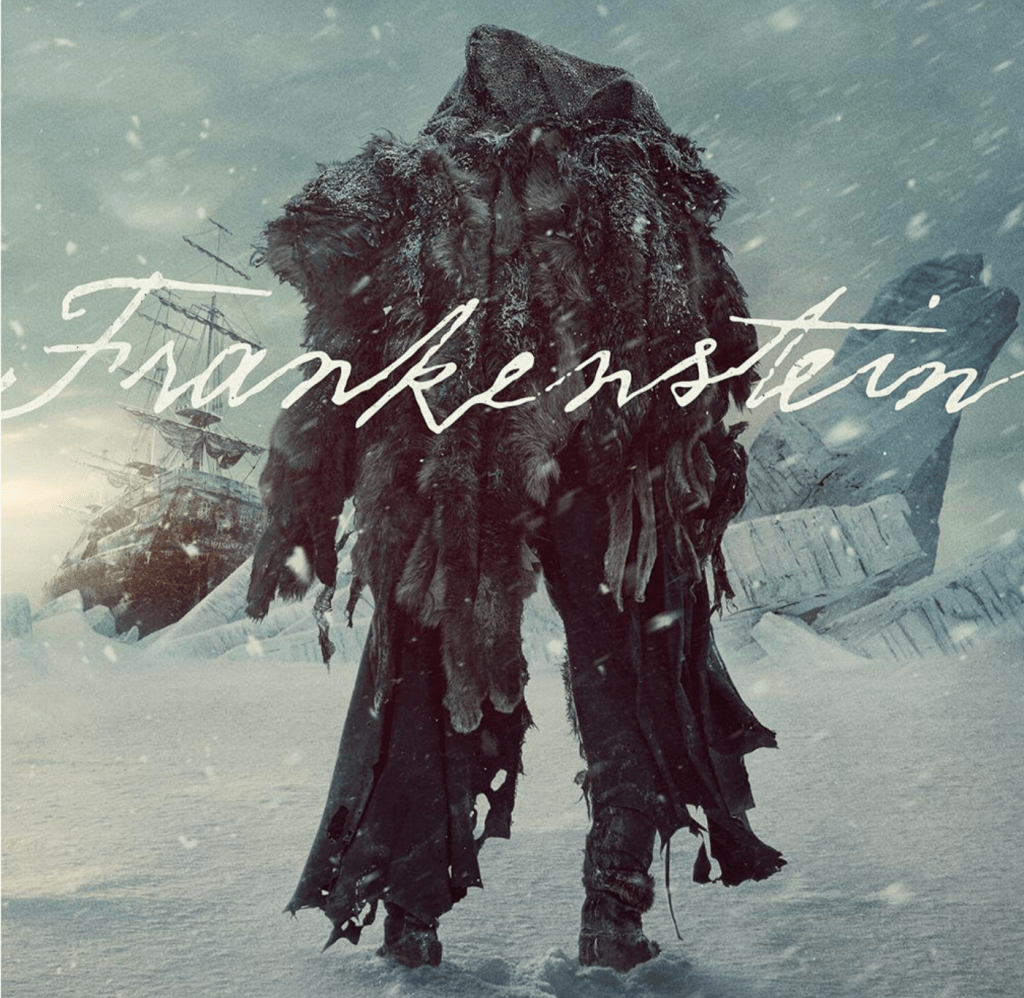
Image courtesy of IMDB
This past month, Guillermo Del Toro’s adaptation of Mary Shelley’s Frankenstein, starring Mia Goth, Jacob Elordi, and Oscar Isaac, was released both in theaters and on Netflix. What set this film apart from past adaptations such as Frankenstein (1931) and Bride of Frankenstein (1935) was its remarkable score, written by French film composer and conductor Alexandre Desplat. Del Toro and Desplat already had a history of partnerships before the making of this movie. such as their work in Pinocchio (2025), and The Shape of Water (2017), which won an Academy Award for best picture of the year and another Academy Award for best music, among a myriad of other awards. Desplat has spoken positively about the experience of working with Del Toro, stating that “I’ve learned his passion for music. When we work together, we have references we can go to. He has an open mind, he’s open to everything, if I say something and it’s good, he’s open to changes.” Their working relationship has continued to deepen with each new project, evolving into a creative dialogue marked by trust, as Desplat also added that “I need to feel that the director has confidence in me, otherwise it’s painful.” This collaboration highlights how a strong director-composer partnership can elevate a film, making its story resonate more powerfully with audiences and between the filmmakers.
During the production of the score, “Desplat was asked to write music that was lyrical and emotional, and which ‘looked for the fragility, delicacy, and suffering’ in the story”. And while Del Toro had to encourage Desplat to step out of his comfort zone and to be more experimental at times, Desplat said on his own accord that he wanted to create something contrasting and unexpected since the visuals are already “on the screen, so why mimic what is already there?” His willingness and desire to develop an emotional contrast between the auditory and visual aspects of the movie was what made the film so sweeping and artistic. Additionally, this film is a great example of how important the relationship between the Director and the Composer is when making a meaningful score. The production of the Frankenstein score was the third time that Alexandre Desplat has worked with Guillermo Del Toro. Desplat says, “I can dedicate myself to his creativity and bring ideas and share them with him”. They created an environment in which both the director and composer succeeded in working without judgment. For composers, it is vital that they are not limited by the director but rather to be guided and inspired.
The relationships between other musical artists and the composer are equally important. Much of the score consists of violin performances by Eldbjørg Hemsing, a Norwegian soloist. Her extraordinary talent and classical skills combined beautifully with Alexandre Desplat’s deep and creative understanding of the story. Both musicians must be willing to lean into each other’s ideas, to find a middle ground that satisfies their personal styles and the greater message they want to convey. Taken as a whole, Eldbjørg Hemsing and Alexandre Desplat did a beautiful job in creating pieces that were accurate in time and emotion.
Much of the music resembles that of the time period. Frankenstein is set in the late 18th century, leading to the score emphasizing characteristics of baroque and romantic music, such as counterpoints, dynamic contrasts, and ornamentation. Counterpoints are often used in baroque music, where multiple melodies are played at the same time, weaving in and out of focus to overlap and create texture and depth. Listeners can follow different strands of the music, as well as take in the entirety of the piece and hear how the different parts come together. For instance, in the piece “Frankenstein” and “Lecture,” an underlying melody is responsible for the fluttering and lightness of the piece. This combination of different sounds and melodies creates a sense of careful curiosity, which extends to the events of the story. It does not remain throughout the entire piece, but is added in specific spots to create more layers.
Desplat’s use of dynamic contrasts also allowed for the dramatic and gothic effect of the score. Dramatically, the music crescendos in and out of loud, tense, and fragile parts. This element is used throughout the entire album and brings alive the intensity and emotional shifts of the on-screen events. In “William and Father,” these characteristics become clear as it features “some lovely interplay between pianos, strings, and choir that sometimes reaches a dramatic crescendo.”
Ornamentation was another characteristic that was accentuated in Desplat’s work. Ornamentations are any extra flourishes that are added to the music to match the time period and create expressiveness. In some of the more fragile and delicate pieces, Desplat chose to add small trills to piano parts. They break up some of the smoothness and remind the audience that the Creature on the screen is intricate and breakable.
Desplat’s use of a vocal ensemble also brings humanity and emotion to many of his pieces in this score. In “Burning Angel,” the heartfelt violin and choir create a deep emotional response in the audience. This song hits so hard because the music directly contrasts with the complex and monstrous creature on screen. The delicate and dramatic music is meant to parallel the emotional turmoil within Frankenstein’s creature.
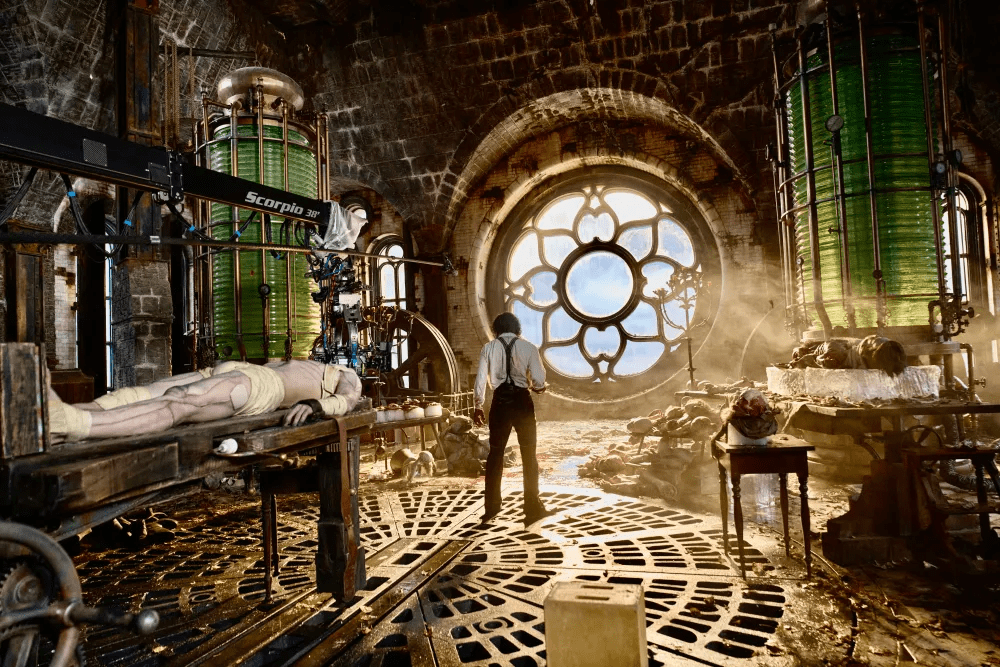
Image courtesy of Variety
Notably, the relationship between what is presented on the screen and the story to the score is also incredibly impactful to the audience. A clear display of this relationship is the scene where Victor builds the creature out of dead bodies as “the orchestra reaches a waltz-like climax” in the piece “Body Building”. Rather than leaning into the grotesque quality of the visuals, the composer instead opts for a curious, hopeful musical approach to deliver the emotion needed. While the visual components of the moment are quite shocking and disturbing, the musical side of it provides a more ritualistic connotation, since Victor’s waltzing around the room to this piece transforms the scene from one of pure horror into one of unsettling beauty and procedure being carried out. Through this balance in the tone of both the score and the cinematography of the film, Del Toro and Desplat are able to guide the audience toward a deeper understanding of Victor’s complex character and where the creature comes from. Much like the creature, the music surrounding his creation is made up of diverse, complex elements, such as strings, bass, drums, and vocals strung together and brought to life. Guillermo Del Toro’s Frankenstein exemplifies the power of a director-composer collaboration. Alexandre Desplat’s score does more than accompany the visuals, as it amplifies and modifies the tone of the film’s individual scenes and the audience’s perception of each individual character. This rendition of Frankenstein truly demonstrates how creative collaboration and personal connections must be balanced and respected to produce a meaningful film score.
 The Overachiever