
By Isabella Nestor (’26)
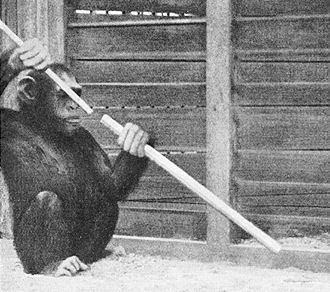
Psychology is grounded in mostly modern findings but occasionally refers back to core studies from the past, which had limited knowledge of Psychology due to the field being in its infancy. One key psychologist who started the field’s rapid growth was Wolfgang Köhler, notably regarded for his study on apes on the island of Tenerife. It is essential to know that his studies started in 1913 and ended in 1920, and that Köhler was German despite inhabiting an island that belonged to the Spanish empire at the time. This job was at high stakes for Köhler, and it was a highly inconvenient place to do a psychological study. Tenerife did not have apes on the island and would have to be transported from a nearby land. Not only was the whole operation expensive, but also highly inconvenient and risky for Köhler and his family. Yet, after the operation, Köhler went back to Germany and became a professor at a highly prestigious university in Berlin, compared to his lowly rank before the Tenerife ape study. From this information alone, a few suspicions arise. Why did Köhler go to Tenerife when there were no apes there to begin with? Why did Köhler become redeemed after his study? Through an investigation prompted by the text A Whisper of Espionage by Ronald Ley, this article dives into the motives behind the study and Wolfgang Köhler’s connection to Germany.
To start investigating the reasons behind the study, the prompting starts on the lovely island of Tenerife, where the ape station was located. On the island lives a man by the name of Manuel Gonzales y Garcia, who runs a shop in a tourist hotel. According to his family members, Manuel lived and worked with Köhler during the time he was in Tenerife, and this was confirmed upon meeting Manuel himself. Manuel claimed he had a close and friendly relationship with Köhler, also confirmed by a letter sent from Köhler after the study was over. Because of his relationship with Köhler, Manuel knew where the ape station was located and how the study was conducted. Surprisingly, Manuel also had some remarks about why Köhler was studying in Tenerife. Manuel revealed that Wolfgang Köhler was a spy working for the German government and was hiding under the ape station with a concealed radio on his roof. Köhler was hiding from the British. And the British were suspicious of him. Being a Spanish island, the neutral Spanish army would often visit his house for traces of spy work; however, a friend of Manuel would warn him, and Manuel told Köhler before the inspectors came. Oftentimes, Köhler would just entertain the inspectors with snacks and drinks until they left. Köhler’s location on neutral land was possibly his way of staying both in and out of the war, according to Manuel and his espionage activities. Köhler wanted to know any and all updates about the war during his time in Tenerife, and the island’s location helped him get it safely.
In the book Mentality of Apes, which is a text written about Köhler’s findings in the ape station, it mentions that the study was completed entirely before WWI broke out. Whatever Köhler was doing with all of his spare time after completing the study was what made his stay in Tenerife so suspicious. Köhler stayed in Tenerife for the entire span of the war, pretending to study more about the apes. Later in 1935, Köhler would appear at the University College for a colloquium where he would have to talk about his psychological findings in the field. Throughout the entire speech, Köhler never mentioned his work in Tenerife and refused to answer questions about his time there, despite Mentality of Apes being the factor that made him popular. No doubt, his obvious denial of the dealings upon living on Tenerife had directly correlated with the fact that his time frame for the ape study was a small portion of his stay on the Canary Islands. Whatever Köhler had been doing after he completed his ape study had been so confidential that he had to awkwardly deny himself from ever being on the island in the first place. No doubt, part of the deal of becoming a spy.
In general, the Canary Islands, where Tenerife was located, were speculated to be a suspicious area regarding the collection of resources and information by the German boats that passed through. The British, aware of the contacts in the nearby vicinity of the Canary Islands, questioned Spain’s neutrality based on the fact that Spain would let knowledge pass through their island. As a result, Spain began inspecting the Canary Islands for the radios that Köhler and possibly others had been secretly using. Adding on to Köhler’s discretion, after his first wife died and he married his second one, Köhler never mentioned anything about his time in Tenerife, although it was what made him popular. This trend seemed to follow from his colloquium at University College. Whatever was so discreet in his findings after Mentality of Apes was published made Köhler aware of the consequences of telling anyone. Köhler might have even been a part of the German army, signing an NDA for the sake of his life. These agreements would certainly take hold for discretion during the fall of the Weimar Republic and the rise of Hitler, intensifying Köhler’s reasoning to stay silent.
All of this information, however, could simply mean nothing. It is known that most verbal accounts of memories are easily influenced by things like traumatic events or schemas. Investigating with only secondary sources is not entirely plausible to truth, even if there was some truth to it. While some deny that Köhler was a spy, many do consider the possibility. And what is there to make of it? Köhler’s spyhood came so unexpectedly not only to his career, but to his family and the people around him. No doubt did these obligations change his life. However, if one were to ride the theory that Köhler was a spy, one could see easily how he would have been secretly employed, already being in Tenerife, as the Great War began. Though the question remains, it is uncertain whether or not Köhler was placed in Tenerife purposely or if it happened to be a mere coincidence used as espionage. Köhler’s position as a psychologist also foreshadows the many atrocities and war crimes seen during the Second World War. In the end, you can even question his studies and whether that information could have helped the German military’s knowledge. Nevertheless, Köhler’s single case depicts the many unseen espionage cases around the world, of course, on a hypothetical spectrum meant to be backed up by evidence that is lacking.
 The Overachiever