
by Sneh Makhecha (‘28)
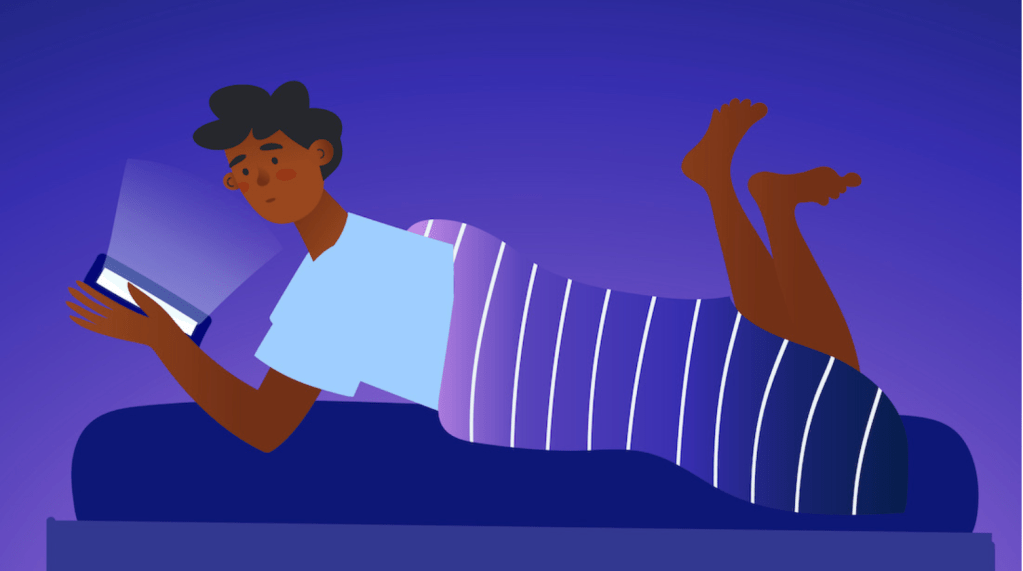
We’ve all heard the rumors about screen time before bed from the constant warnings from our doctors to the distressed pleas of our parents. But are they true? I’ve spent more of my free time than I’d like to admit binge-watching Netflix, texting, and scrolling through my camera roll before sleeping. I’ve never particularly considered the consequences until recently, when I started to notice that I would spend a lot of my “sleeping time” by staring at the ceiling, willing myself to fall asleep. I also realized that when I was younger, I had never experienced this issue. Could this just be a result of growing older, or is there a much deeper meaning to this seemingly insignificant problem?
To really understand the effect that social media has on sleep, we have to delve into the science behind this issue. Before falling asleep, humans produce a hormone known as melatonin. The job of this hormone is to signal our body to slowly power down, and it is activated by the decrease of light around us. When looking at any sort of screen, such as a phone, before bed, we are receiving wavelengths of blue light transmitted from the device. Our brain processes this light as daylight, signaling to our body that we should still be awake. Without melatonin letting our body know that it’s time to go to bed, our body stays in alert mode instead of drifting off to sleep.
So how did we get addicted to social media in the first place? How did our obsession with online social platforms become so extreme, causing so many young people to compromise on their sleep? Jacqueline Sperling, a psychologist at McLean Hospital, relates this addiction to a slot machine. With slot machines, players know that they have a chance at earning money. If they weren’t aware of this chance, they probably wouldn’t play. The same goes for social apps such as TikTok and Instagram. Content creators never know how many people will like their post, so they become addicted to constantly posting to see how many likes they can get. Essentially, social media is like a never-ending loop of doom. Once you get too far into it, it’s hard to pull yourself out.
Another reason why social media can become very addicting, especially during the nighttime, is because of FOMO (Fear of Missing Out). A study done in 2012 showed that adolescents spend 54% of their screen time on social media apps, and this number has definitely increased in recent years. This is a result of many teens feeling pressured to respond to their messages in fear of judgment from others. Unfortunately, this continues on into the night, robbing many teenagers of their sleep. In addition, not getting enough sleep can cause depression and anxiety. With these conditions, teens are more prone to feeling emotionally blackmailed to respond to messages, and therefore, more prone to skipping sleep in order to do so.
So to answer the question proposed at the beginning of the article, social media can ruin our sleep, whether we like it or not. While there are some benefits to social media, like connecting with friends and family, this can often provide an unnecessary amount of stress to young adults. This stress often results in skipping sleep to reply to messages, posting new content, and endlessly scrolling on social media platforms. If you feel like your sleep is being disturbed because of the use of technology before bed, my advice is to participate in activities that are screen-time free, such as reading a book, taking a relaxing shower, or meditating before bed. Taking some time for yourself unrelated to screens will make all the difference, because you deserve that time more than any social media app does.
 The Overachiever