
by Stevie Ryke (‘27)
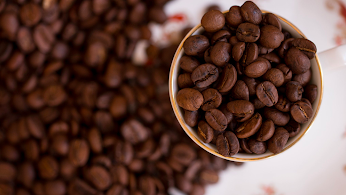
As the climate juggles its cards, your morning cup of coffee may soon bear the imprint of a world in flux as the journey from bean to brew takes an unexpected climatic detour. The majority of people drink Arabica and robusta coffee. Imagine the flowery, nutty, lightly caramelized, chocolatey coffee that is your morning brew. Your morning alarms ring, a broken routine, but coffee gives you the courage to awaken. You feel the warm mixture that some consider medicine and know your day will begin in seconds. Over half of the nation consumes coffee daily. What would happen if coffee disappeared? Warning, warning, climate change is challenging your daily brew!
Brazil: tropical, equatorial, sprawling wetlands, and coffee central. Land suitable for growing coffee will significantly decrease by 2050. Brazil, Vietnam, Columbia, and Indonesia are the top five coffee-producing countries. All of them will see a decrease in the sustainability and size of coffee production. The PH and solid texture may change due to increased rainfall from climate change, subsequently diminishing coffee production. More concerning, areas suitable for growing coffee will decrease by 50%. Central America has already lost 85% of its crops due to increased rainfall causing insects and diseases.
Coffee may seem insignificant compared to detrimental climate change effects. Yet, Americans have interwoven coffee into the fabric of their everyday lives. 75% of Americans rely on coffee to get up in the morning. 3-5 cups of coffee are drunk daily by 49% of the population, 56% of people believe that coffee benefits their health, and coffee is a 93.2 billion dollar industry. The United States has the highest revenue of coffee consumption in the world. Less coffee is arguably one of the most significant effects of climate change, as many Americans depend on it.
Adaptation is the best characteristic of humans. We have evolved to walk upright, develop increased lung capacity, larger brains, and have opposable thumbs. We have developed potential solutions to reduce the impact of climate change on coffee farming areas. For instance, Starbucks is developing arabica variants to withstand changing climate conditions. Starbucks makes up 3% of the world’s coffee. Imagine waking up and feeling unmotivated to go to work but motivated by the thought of overpriced Starbucks coffee. Cold, icy, flavorful Starbucks is the life of many Americans. For ten years, agronomists have been breeding different coffee trees for Starbucks. They have been attempting to avoid coffee leaf rust, a disease due to increased rainfall, causing insects.
Indoor, hydroponic, and vertical farming are all techniques coffee farmers have begun to research. Nature is breathtaking, tender, flawless, breezy, abloom, and unreliable. Since 1981, temperature has risen .31 degrees Celsius per decade. Farmers can’t continue as if the weather is predictable because change occurs at unpredictable rates. 2023 broke the pitiful record of natural disasters. Each year, climate disasters cost an average of 18 billion dollars. Sustainable indoor coffee farming allows greater control over water, light exposure, and wind levels. Yet, utopia ceases to exist. Vertical farming takes place inside, upon stacked layers of plants. Vertical farming is unsustainable for small farmers because high costs and low yields discourage them. Wealthy countries can thrive while struggling countries suffer. For example, affluent countries can afford engineered fertilizing and drip irrigation systems.
Climate change has harmful effects, as weather unpredictability affects farmers. Also, 50% of suitable land for coffee farming will vanish, affecting many Americans who rely on coffee. Brazil, Vietnam, Colombia, and Indonesia’s economies heavily rely on coffee and may suffer. Indoor, hydroponic, and vertical farming are all breakthrough sustainable coffee farming methods that poorer countries can’t afford. In the face of climate change, the fragility of our daily coffee ritual becomes apparent, challenging both the sustainability of coffee production and the daily routines of millions around the globe.
 The Overachiever