
ASM: Yes that is a very important point in our more connected world. I want to continue on this idea of the new strategy Ford took when making the Mach-E and electric cars. Recently, I read a very interesting article about your group, Team Edison, and noted that Team Edison required a shift in its mindset, which I think you yourself said in an interview. So my question is that in order to develop this new electric car, was it necessary for Ford to overhaul its development process and is this change in strategy necessary to compete against Tesla and other startups in order to innovate and create electric cars of the future?
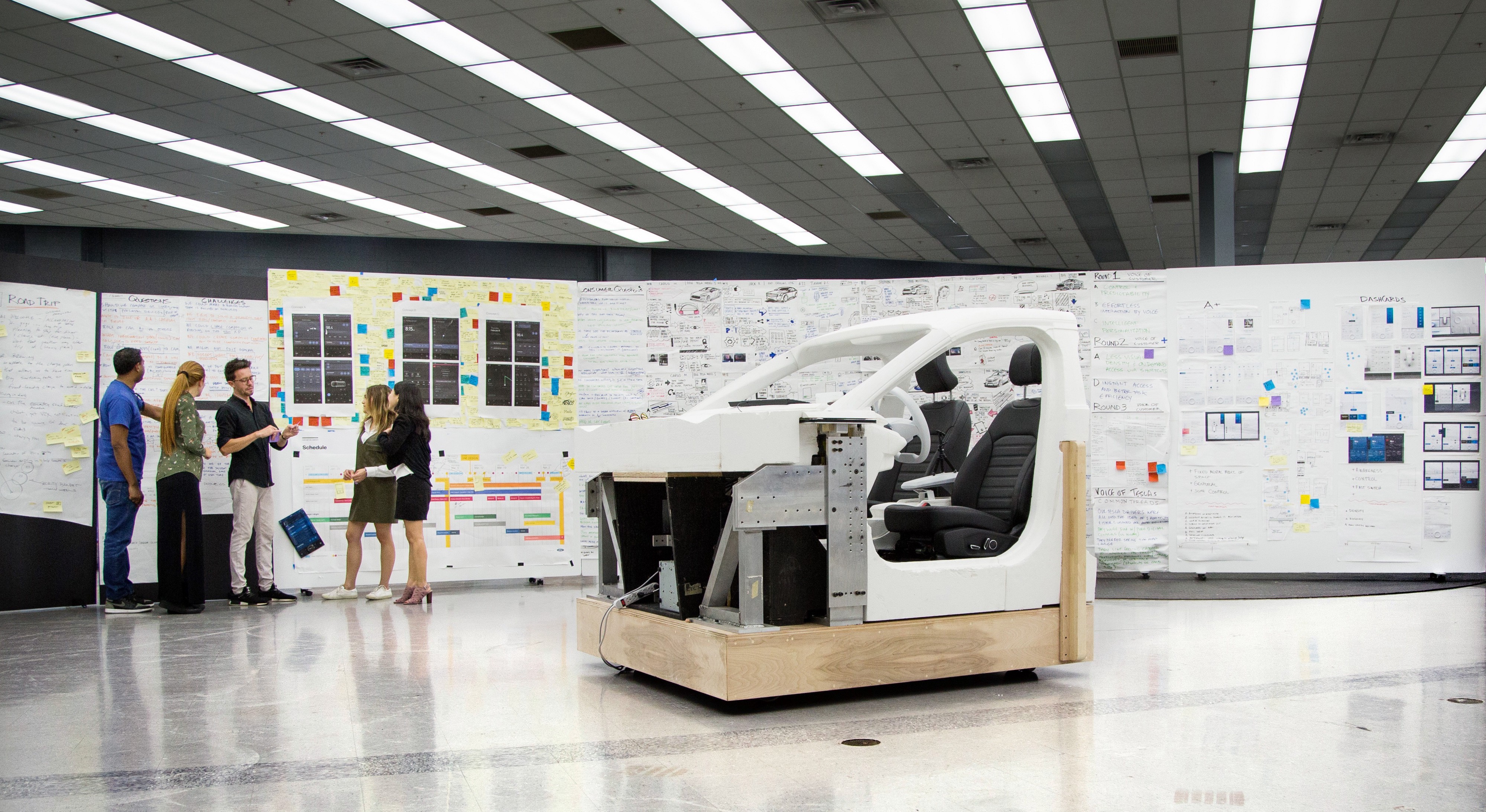
DP: So what we had to do, we decided we wanted to make a complete change in our strategy ad because we do make a lot of gas vehicles, and they are very successful, a large company has a thing called the innovator’s dilemma where it is very difficult to disrupt yourself because the rest of the system will keep making your product a little better, listen to your customers and keep making your product better, so you keep doing that and optimize your product, and that’s how a lot of companies are and when there is something new it is very difficult to disrupt yourself. So we saw that happening and after a few attempts it was not working and so that is why Ford created Team Edison. To say break out from the norm, take a group of open minded people with cross functional skills and different ages and work together to delight the customers, that’s how you disrupt yourself. We worked more in the way like a California startup. As soon as we started working like that we realized the value in that. It’s where everybody’s ideas are valued the same, you have different perspectives coming in and all different age groups because each group has experiences that are different and relevant to their own age group. Working that way allowed us to choose what we wanted to do. Now once you know what you want to do, like we needed a completely new computer and Human Machine Interface for the car, I realized that it is absolutely required to be successful. So we went back to the main company and said that we need this. And then the company said “We don’t have it, the product development process the decision was made two years ago is too late”. But now we know that we want it so we said okay we will go to the working level, the people who do the creations, and we’ll go and talk to them and so we went down and sat with them and it was a group of young people, not unlike yourself, and we sat with them and told them to forget the old way of working and told them to talk about the problem and say anything you want. They were nervous and worried and we asked how might we create a system like this, and once they were comfortable, they said not working like the way you were but rather like a California startup. Meaning that we need to be co-located and need access to customers. So we said that is quite similar to Edison and they said exactly like that. So we gave them the enabling tools. We need technology, we need a space, we need access to manage, we need management to support and lots of pizza and coffee as it turns out. We will provide you with that space and it was up to us to provide the environment. That team of maybe fifteen developed a completely all new HMI for that car in 90 days.

ASM: Wow!
DP: We never did it in less than two years before and now they did it in 90 days. Most of them were working level graduates with probably up to 10 year experience if not more and they did it in 90 days and then we got the rest of the company to build it right. That was a completely different way of working and what’s more, by the end of that, every member of that team was up here (motions hand quite high relative to camera) with excitement right, they loved what they did and they were proud of it and they never wanted to work differently again. It was the same at Team Edison. The attrition from the team in three years was 0. Nobody wanted to leave, everybody wanted to work that way and come in everyday. So we saw this is the future, this is the new way to work and the environment is important and that’s what attracts young talent. That’s how young people want to work. So that’s why we bought the train station and we are creating an environment there for young people to work and in the way they want to. They want to contribute and not wait twenty years before they are adding so we have learned that and that is what we are trying to turn our whole company into.
ASM: Right.
DP: The results are incredible. We went from no electric cars like that to one that is equal to the number one in the US. Some would say number one because it did win those awards, but let’s be humble and say it’s at least the equal number one with the other company we know. But that’s quite incredible for a legacy company like Ford to do, and who expected us to do that and it was only by working differently and working in a more modern way. So we are doing that now, we are transforming the whole company like that and we will never go back to the big offices with the little cubes and everybody working separately. That is our job and that is actually what we are setting up now. It’s a new company and we have already seen how making products like the Mach-E is attracting new and young talent to our business as is AV and EV. Autonomous vehicles are a very exciting subject for young people and they are really robotics, technology and connectivity and so we need to attract young talent and people who want to work in that space. So we are building a completely new campus in both Dearborn and the train station in Detroit to attract young and bright people to this business.
ASM: Our time is getting a little close so depending on how much time you have I can adjust likewise.
DP: Keep going, no problem.
ASM: Alright then. Ford’s CEO has said that in Europe at least Ford hopes to go fully electric or hybrid by mid-2026 and completely battery powered by 2030. This is also accompanied by a $22 billion to bring 40 electric cars to the market by 2025. This is obviously quite a rapid lace and by no doubt helped by the new strategy at Ford. And while electric cars are definitely cleaner than gas, there are still environmental costs, one being lithium mining. So as Ford looks into the next ten years, how do you plan to make electric cars in a sustainable manner?
DP: Yeah, so that is something really important to our CEO, Jim Farley, and he has been a real campaigner for environmental issues and for our company to be like that for decades actually. But it’s now becoming really important to the world and he was the first to be for the California Climate agreement, in fact, Ford stood for that well before others did and we stood by that. In fact, that agreement was signed on the hood of Mach-E, so that is important for us. We are looking at all sorts of green technologies and looking at a whole range of those, biofuels and hydrogen, we are looking at those as well and how valid they could be. We intend to achieve carbon neutrality globally by 2050 and that’s in line with the Paris agreement. We are working very strongly with California for stronger greenhouse gas standards and we are focusing on three areas that account for about 95% of our carbon dioxide emissions: vehicle use, supply use, and company operations. We are on track to power all of our manufacturing plants by 100% locally sourced and renewable energy by 2035. So we recently invested 22 billion under Jim Farley, and he has been driving that for us, and committed to even more EVs, so I have EVs as my responsibility and even more of them coming now, so you will see a whole range of them. A very, very important vehicle coming soon is the F-150. This is America’s most popular vehicle by a long way and has been for a long time. Us electrifying that vehicle is something we are taking very seriously. We haven’t shared too much about it yet but we are planning something that is very compelling and something that will entice customers to take up EVs. We are seeing that already with the Mach-E that people who have never seen it are going from what is that car to I gotta have it in 20 minutes when they see and drive it. That is important and that is what it was made for, it was designed to pull more people in, not just hardcore electric fans, it was meant for people who didnt even know that they even want it yet and it does things that is really compelling and makes you want it and the truck is going to be the same. There’s going to be reasons why you did not know you wanted it and when you see it you say “I want it”. Even in hybrid, we saw that it has to be more than just fuel economy. So we put onboard Pro Power. Bodhi you can correct my name in a minute, so its pro power on board in place because that is something that products can do and it has up to 7.6KW and can power a big house and we put that in the vehicle. And so when the disaster struck in Texas people were using that to power their houses. In fact, Ford asked dealers to give the brand out trucks to be used in the community in time of need, Bill Ford put that out, and they have been using those trucks to help customers in the community. It has also shown what new products can do and people didn’t know they wanted it because it did not exist. Suddenly we have a huge interest in hybrid trucks at the moment because people have realized how useful it is and how it does something it never did before. That’s what electric cars are going to do, everyone is going to do something very compelling about it that you didn’t even know you wanted before seeing. So that’s our approach in bringing people in.

 The Overachiever
Great interview
LikeLike